
A documentary in nine chapters
From Seed to Legend
Every great Nicaraguan cigar begins as a tiny seed in a seedbed and ends, years later, in a box. Follow one leaf through nine chapters, from the seedbed to the finished cigar.

It starts with Cuban seed
The seed
In 1965 a Havana tobacco pilot project singled out Estelí and Condega as the best tobacco land in Nicaragua. Cuban growers such as Juan Francisco Bermejo arrived and planted Cuban seed, and three years later he and Simón Camacho founded the country's first cigar factory in Estelí.
Every crop still begins in a seedbed. In about 40 days a seed becomes a plant roughly four inches tall, ready to move to the field.
Did you know? Cuban-seed varieties still dominate. In one recent season Plasencia grew mostly Criollo '98 and Corojo '99, both Cuban-seed tobaccos. Source
- Habano
- Cuban-seed tobacco that grows squat, thick, dark leaves; Padrón grows it in open sun.
Sources: Joya de Nicaragua: our history · Cigar Aficionado: Nicaragua's Power Leaf

Three valleys, three personalities
The valleys
Estelí is known for powerful, spicy leaf. Jalapa, about 90 miles to the north, is cooler, more humid and rainier, and cigar makers turn to it for elegant wrappers and subtler tobacco. Condega's soil is nearly black, Jalapa's reddish-brown.
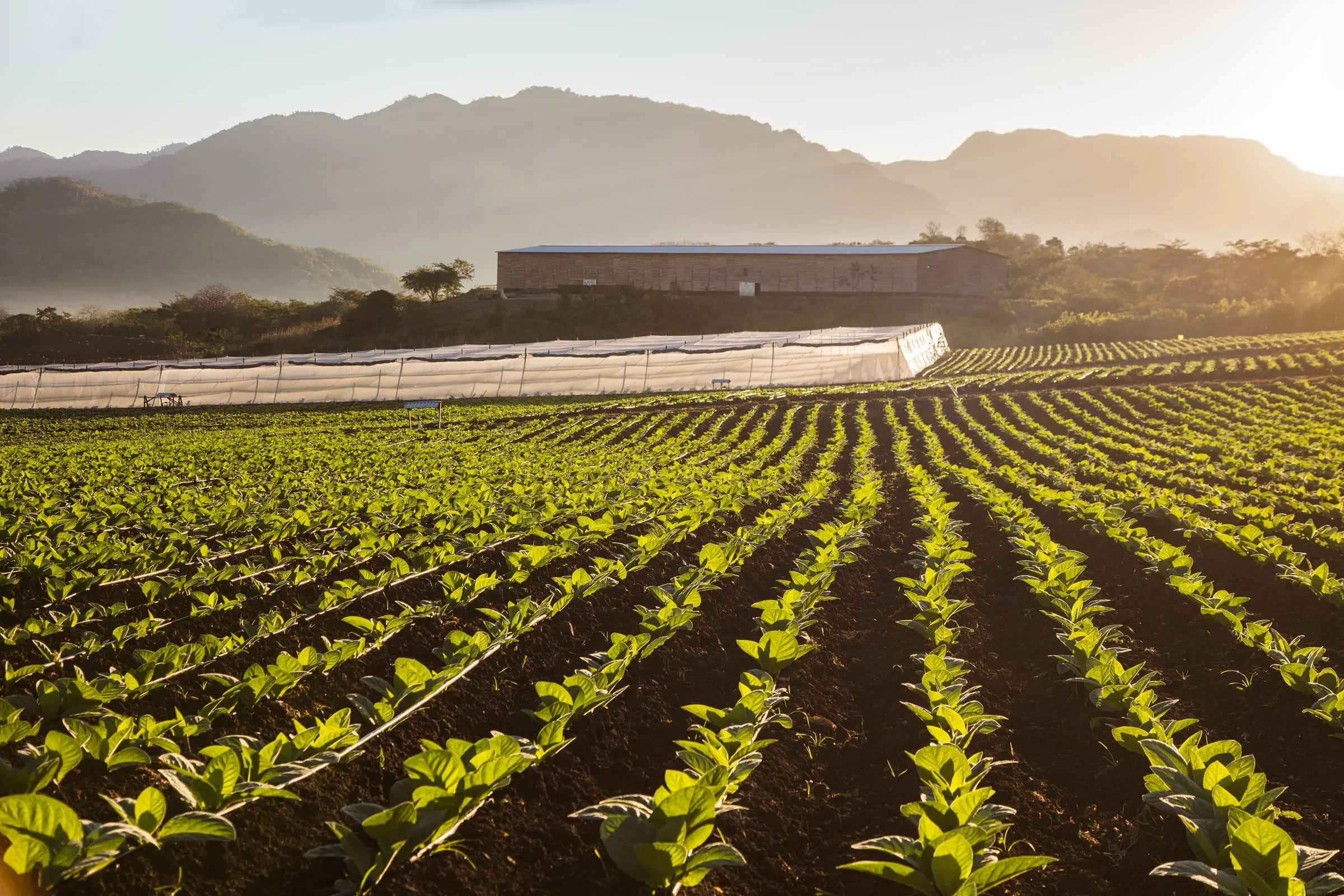
Wrapper is often grown under mesh tents that filter the sun and keep the leaves thin and flawless. Other tobacco, like Padrón's Habano, grows in the open sun for about three months.
Did you know? A single Habano plant grows 16 to 18 leaves, and only two to four of them are good enough to become wrapper. Source
- sun-grown / shade-grown
- Leaf grown in open sun is usually thicker and darker; leaf grown under cloth or mesh stays thinner, ideal for wrapper.
Sources: Cigar Aficionado: Land of the Wrapper Leaf, touring Jalapa · Cigar Aficionado: Nicaragua's Power Leaf
Picked from the bottom up
The harvest
Tobacco isn't cut down all at once. Leaves are picked a few at a time as they ripen, starting at the bottom of the plant and working up. Each picking is called a priming.
The higher the leaf, the stronger it is: mild seco, stronger viso and, near the top, ligero, the most powerful of all.
Did you know? Nestor Plasencia Sr. warns that the first priming is not always seco: seed, planting time, rain and soil all change where each type grows on the plant. Source
- seco
- The mildest leaf, from lower on the plant.
- viso
- Stronger leaf from higher up.
- ligero
- The most powerful leaf, from near the top; it gives a blend its strength.
Sources: Cigar Aficionado: Nicaragua, the New Start · Cigar Aficionado: Plasencias harvesting 152nd crop

Green to gold, slowly
The barn
Fresh leaves go to tall wooden barns and hang on poles to dry. Over weeks they turn from green to yellow to brown, and the moisture has to leave gradually for the leaf to develop its natural sweetness.
At Padrón the curing takes about two months, though heat, humidity and rain can stretch or shorten it. Wrapper is ready when it is brown and pleasantly elastic.
Did you know? In one Nicaraguan growing area, Cigar Aficionado found curing barns spread across the land "like a tiny city". Source
- cuje
- The wooden pole the leaves hang from in the curing barn.
Sources: Cigar Aficionado: Land of the Wrapper Leaf · Padrón: vertically integrated · Cigar Aficionado: Nicaragua's Power Leaf

A ton of patience
Fermentation
Cured leaves are tied into bundles called hands and stacked into a pilón, a waist-high pile that can weigh more than a ton. The weight and moisture create heat, and the heat starts fermentation, driving out ammonia and the harshness that would make tobacco unsmokeable.
When a pile reaches the right temperature, workers take it apart and rebuild it so every leaf ferments evenly. The cycle repeats for months or longer.
Did you know? Heavy tobacco can take as long as two years to be fully fermented. Source
- pilón
- A fermentation pile of cured tobacco; also called a burro, bulk or troje.
- hand
- A small bundle of leaves tied at the stems.
Sources: Cigar Aficionado glossary: pilón · Cigar Aficionado: Nicaragua, the New Start · Cigar Aficionado: Padrón factory tour

Years in the bale
Sorting and aging
Fermented leaf is sorted by type, the central vein is stripped out, and the tobacco is packed into bales to rest. It is waiting, and getting better.
Padrón ages its tobacco for three to four years, and keeps around six years of leaf in stock so its blends never change.
Did you know? By the time it is rolled, the tobacco inside a Padrón cigar can be five and a half years old. Source
- deveining
- Stripping the central vein (stem) out of the leaf before aging.
Sources: Padrón: vertically integrated · Cigar Aficionado: Nicaragua, the New Start · Cigar Aficionado: Nicaragua's Power Leaf
A recipe of valleys
The blend
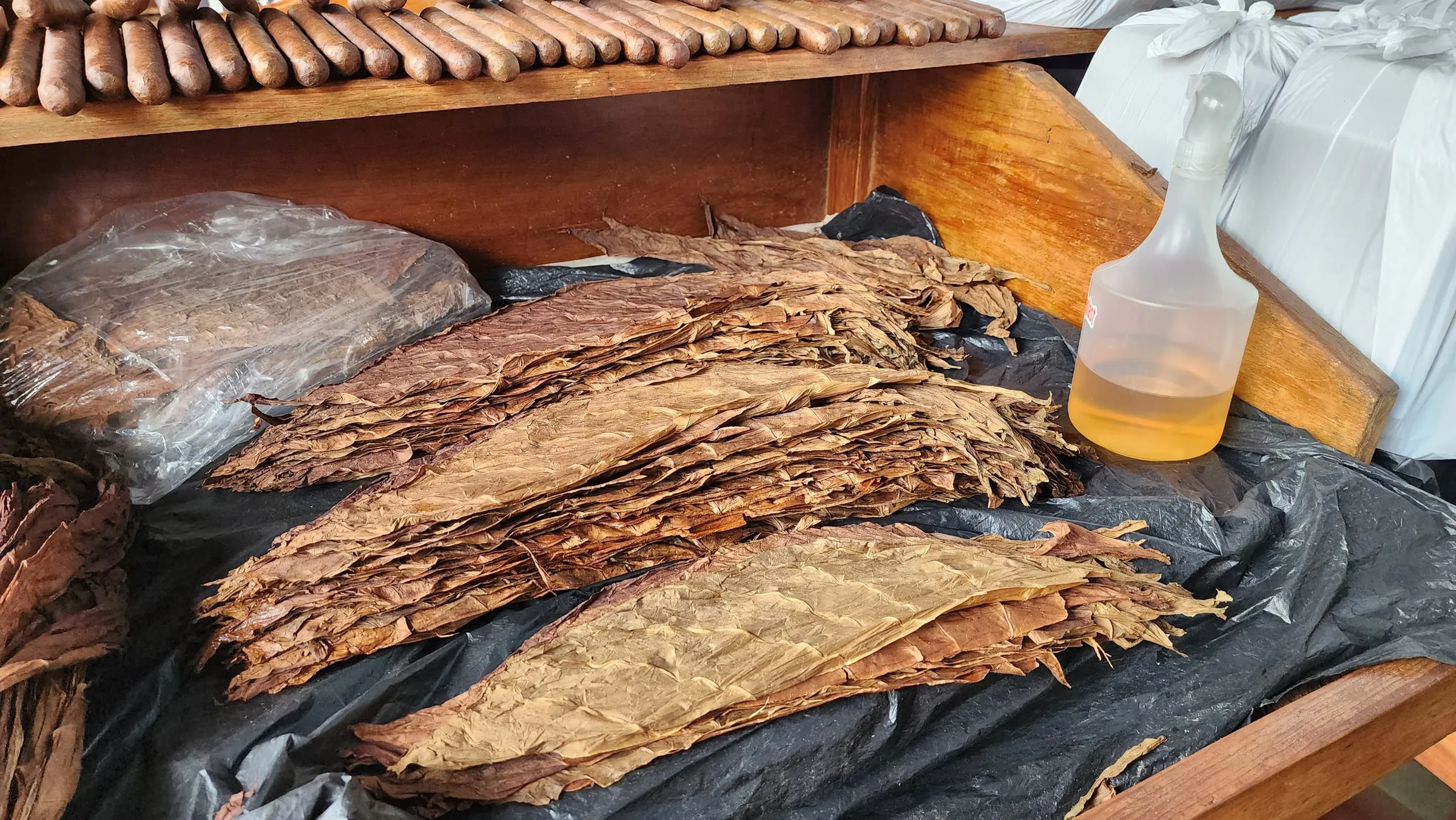
A cigar is three parts: filler at the heart, a binder that holds it together, and the wrapper outside. The blender chooses each leaf by region, priming and age.
Powerful Estelí leaf and more elegant Jalapa leaf play different parts. Padrón builds its complex flavour by blending tobacco from different areas of Nicaragua.
Did you know? Plasencia's technicians sort leaf into seco, viso and ligero before fermentation and ferment each type separately, because each needs different treatment. Source
- filler
- The leaves at the core of the cigar.
- binder
- The leaf that holds the filler together.
- wrapper
- The finest, outermost leaf.
Sources: Cigar Aficionado: Nicaragua's Power Leaf · Cigar Aficionado: Nicaragua, the New Start
Two pairs of hands
The roll
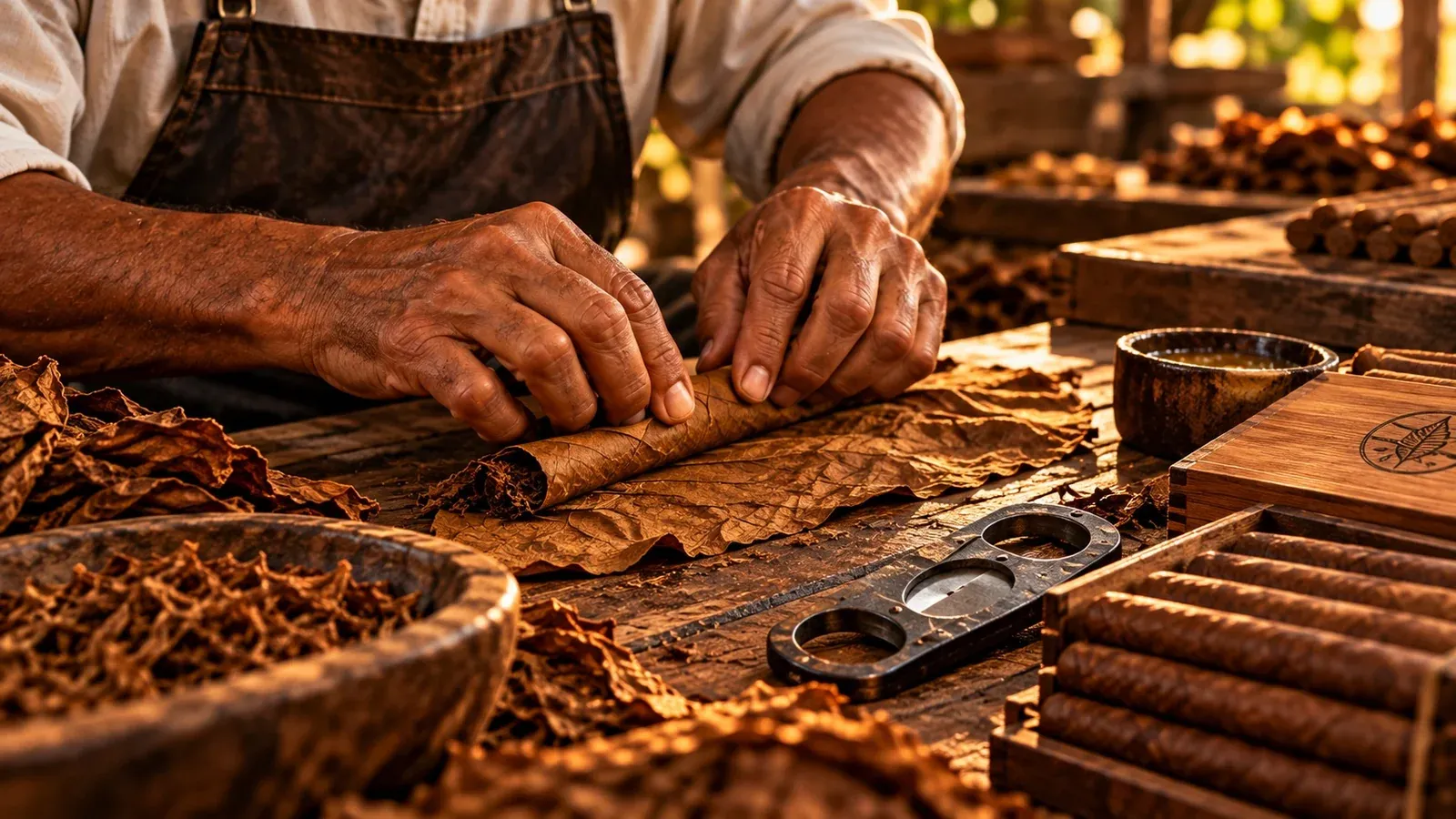
Rolling is done in pairs. The buncher gathers the filler inside the binder and sets the bunch in a wooden mold to take its shape. The roller then stretches a moistened wrapper leaf around it in a smooth spiral and finishes the head with a cap.
Padrón's Estelí factory has around 90 pairs of rollers, who made 9.5 million cigars in a single year.
Did you know? At Drew Estate, a trainee rolls 50 to 75 cigars a day after eight months of training; experienced rollers make 250 to 375. Source
- bunchero
- The buncher, who forms the filler and binder.
- rollera / torcedor
- The roller, who applies the wrapper and cap.
Sources: Cigar Aficionado: Padrón factory tour · Whisky Magazine: Hand rolled in Nicaragua

Rest, band, box
The legend
Most finished cigars rest in an aging room before they are sorted by colour so a box looks uniform, banded and boxed. Padrón is one of the exceptions: it bands and ships soon after rolling, and builds its own boxes in an on-site workshop.
Then they go out into the world, and the world has noticed.
Did you know? In 2025, 258.4 million of the 429.8 million premium cigars imported into the United States were made in Nicaragua: about 60 percent. Source
- aging room
- A climate-controlled room where finished cigars rest before they ship.
Sources: Cigar Aficionado: Padrón factory tour · Cigar Aficionado: premium cigar imports flat for 2025
The end of the journey
Now meet the legends
Eleven times, a cigar that began this way was named the best in the world.